ShipStation vs Shippo: Order Fulfillment and Discounted Postage for Small Shopify Brands
Compare ShipStation vs Shippo for your small Shopify store. Review postage discounts, automation presets, and pricing to pick the right fulfillment tool.

Automation Presets and Daily Packing Station Workflows
When comparing shipstation vs shippo for fulfillment station efficiency, order routing depth is a primary differentiator. ShipStation includes condition-based automation rules that route orders by weight, SKU, destination ZIP code, and closest warehouse. It also pairs these criteria with an Automated Rate Shopper to programmatically select the cheapest, fastest, or best-value shipping option. In contrast, Shippo supports multiple ship-from addresses but does not offer destination ZIP-based routing rules, which leaves high-volume multi-facility setups with more manual sorting.
At the packing bench, teams processing daily batches need straightforward pick lists and printing tools. Shippo Pro plans introduce scan-to-print pick lists, branded packing slips, and branded tracking pages alongside phone and chat support. Fulfillment operators can refer to our practical guide hub to evaluate operational benchmarks, noting that exact carrier discounts depend on shipping volume and carrier mix rather than solely the software platform.
How was this review researched?
This article uses the public documentation and pricing cited below. Unverified vendor claims were left out.
Is Shippo or ShipStation better for small business?
Shippo is the easier choice for low-volume stores: its free Starter tier covers up to 30 labels a month with pre-negotiated carrier discounts. ShipStation is better once you need advanced warehouse routing, barcode scan-to-verify, split shipments and multi-channel automation, and it has no permanent free tier.
Does Shippo offer cheaper shipping rates than ShipStation?
Shippo advertises savings of up to roughly 90% off USPS retail and about 85% off UPS, while ShipStation advertises up to 84–90% across parcel carriers. Both pass through pre-negotiated rates, so the cheaper option depends on your carrier mix and volume; Shippo also has a free 30-label Starter plan.
How do ShipStation automation rules compare to Shippo?
ShipStation has deeper condition-based rules that can route by weight, SKU, destination ZIP and closest warehouse, plus an Automated Rate Shopper. Shippo supports simpler if/then rules on every plan, which is enough for straightforward single-location fulfillment.
Which shipping app is easier for Shopify packing?
Shippo’s cleaner dashboard and faster onboarding are easier for solo operators and small catalogs. ShipStation takes more setup but adds barcode scan-to-verify, batch printing up to 200 labels and split shipments for busier packing stations.
Quick verdict
Quick verdict
Deciding between shipstation vs shippo hinges on order volume, packing workflow complexity, and your software budget. Shippo serves smaller catalogs best, pairing an intuitive interface with a permanent free Starter tier for up to 30 labels monthly, API access across every tier, and deep commercial carrier discounts without volume commitments.
Choose Shippo if you want instant setup and commercial carrier rates without monthly platform fees under 30 shipments. Choose ShipStation once you require barcode scan-to-verify tools, shipment splitting, and conditional automation rules to handle complex multichannel warehouse logistics.
How We Evaluated Both Platforms
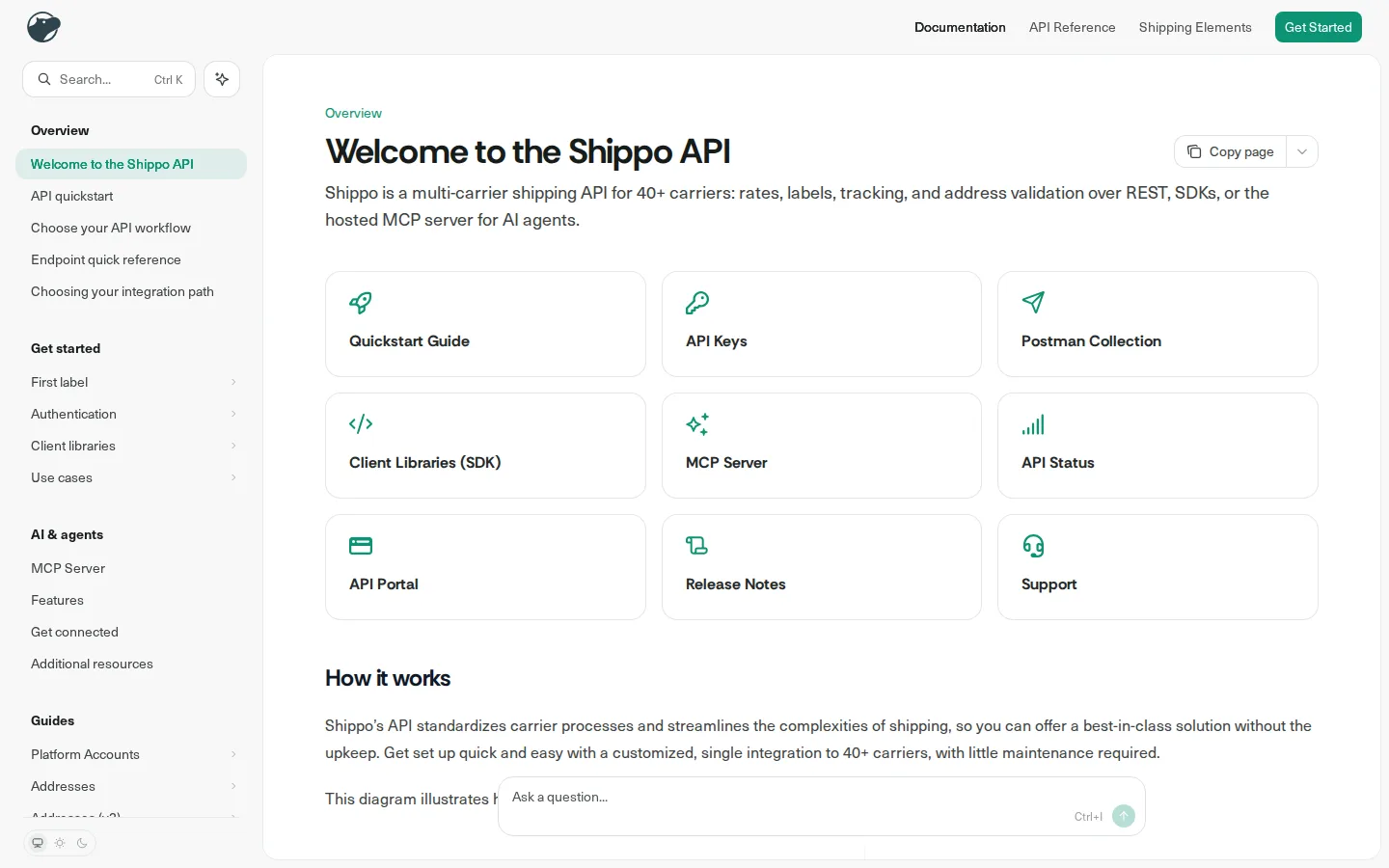
Our shipstation vs shippo review examines published documentation, pricing tiers, and vendor policies rather than simulated warehouse runs. We evaluated how each platform handles pre-negotiated commercial carrier discounts across major couriers like USPS and UPS, contrasting entry-level costs such as Shippo's free 30-label Starter tier against ShipStation's paid entry tiers.
Source: docs.goshippo.com
To gauge the daily operational learning curve, we assessed interface workflows for warehouse packing station workers. Shippo maintains a cleaner, modern web dashboard that simplifies initial onboarding, whereas ShipStation introduces advanced fulfillment capabilities—including scan-to-verify tools and split shipments—that demand greater setup effort alongside its wider library of platform integrations. You can find our methodology across adjacent categories in our comparison hub.
ShipStation vs Shippo at a Glance
Choosing between ShipStation vs Shippo comes down to balancing complex fulfillment routing against straightforward setup. Following our review methodology, we evaluated how both platforms handle rates, carrier networks, and monthly operational costs.
• Feature | ShipStation | Shippo
• Starting Price | $14.99/mo (50 shipments) | Free Starter plan (up to 30 labels/mo)
• Carrier Discounts | Pre-negotiated rates with USPS, UPS, FedEx, DHL Express | Up to 90% savings across USPS, UPS, FedEx, DHL Express
• Carrier Network | Multi-carrier network with discounted accounts | 40+ global carrier integrations
• Core Strengths | Warehouse routing, pick lists, barcode scanning | Simple setup, API access, USPS Cubic quoting
• Custom Carrier Fee | Included in standard subscription tiers | $0.05/label on Starter; free on Pro tiers
Both services provide pre-negotiated commercial discounts with major carriers, but neither publishes a static postage rate card across the board. ShipStation focuses on automated rate shopping and warehouse packing tools, while Shippo keeps barrier to entry low with an accessible free tier and fast onboarding.
Carrier Discounts and Multi-Carrier Coverage
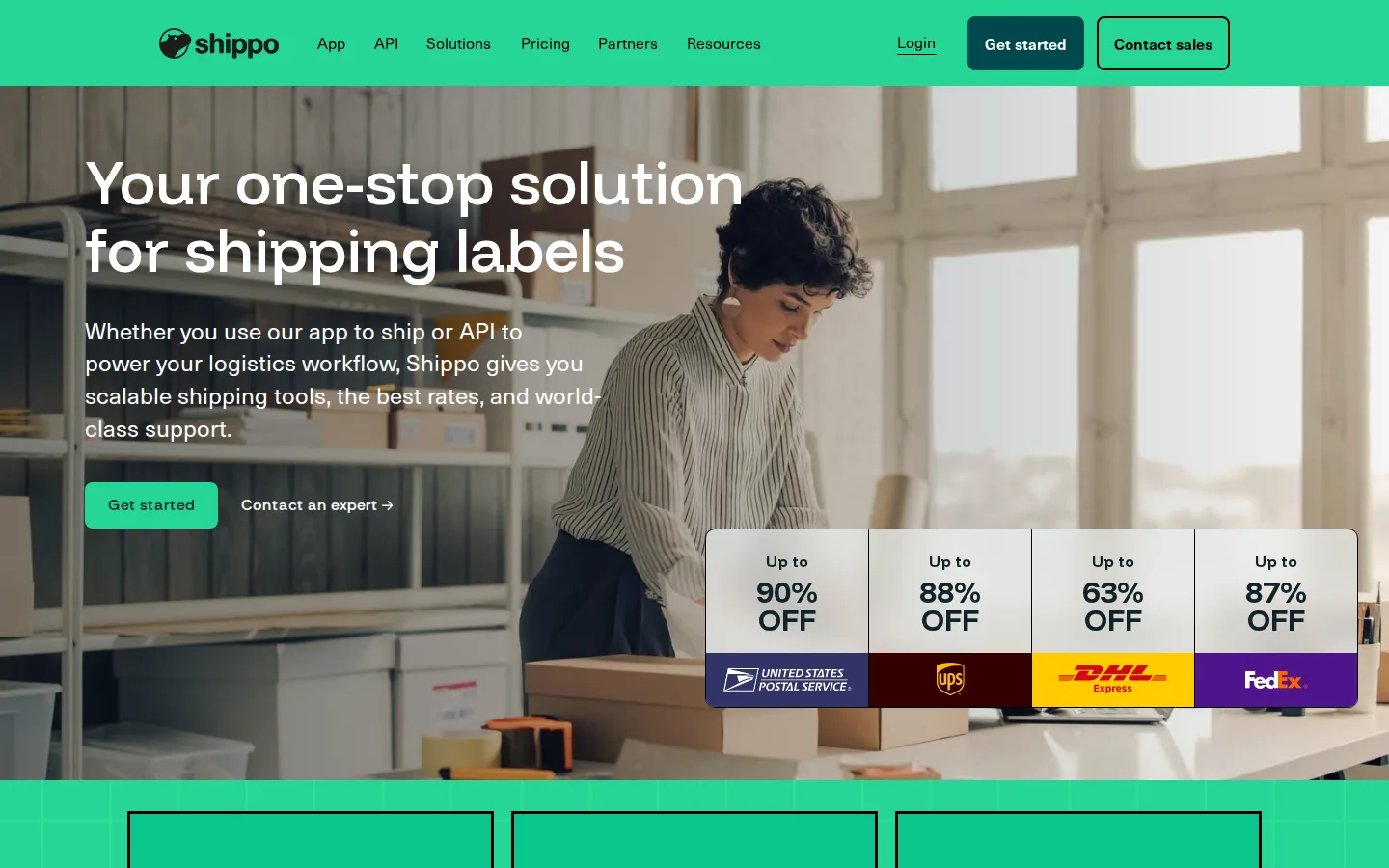
When evaluating shipstation vs shippo for small operations, built-in carrier rates serve as a major cost consideration. Shippo integrates across more than 40 carrier networks via its web dashboard and API, providing access to pre-negotiated commercial rates. Shippo claims potential carrier savings of up to 90 percent off standard USPS, UPS, and FedEx rates without requiring volume commitments, making it an accessible shipping software for small shopify brands looking to save immediately on package labels. Our software review hub provides broader operational benchmarks for fulfillment platforms.
Source: goshippo.com
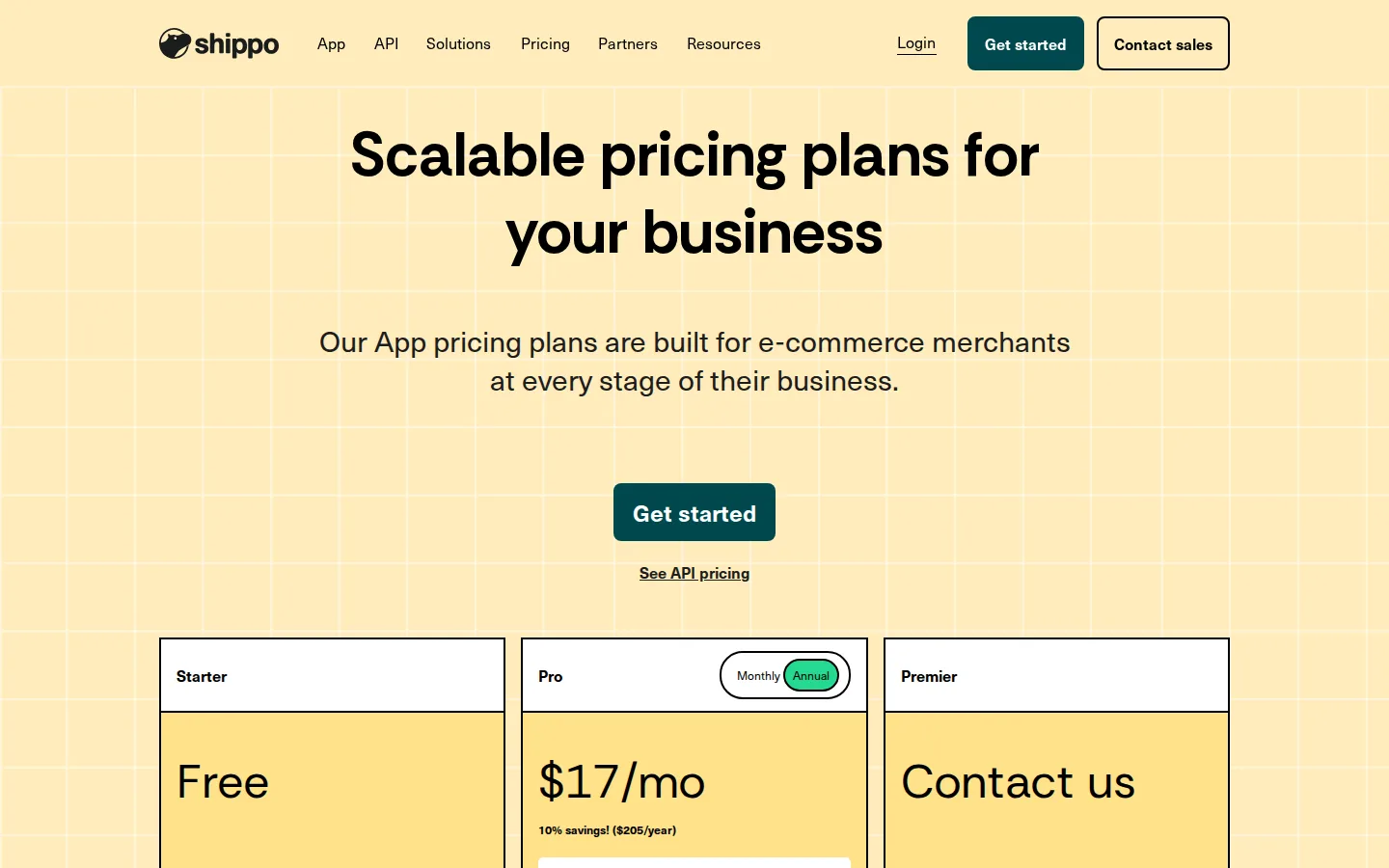
For low-volume shippers handling under 30 shipping labels each month, Shippo offers a free Starter tier with pre-negotiated carrier discounts included. However, connecting your own negotiated carrier accounts on the Starter plan incurs a $0.05 per-label fee. Upgrading to a Pro plan, which begins at $17 per month for 1 to 200 labels and scales up to $199 per month for 5,001 to 10,000 labels, removes the per-label fee on external carrier accounts and unlocks features like branded tracking pages, branded packing slips, scan-to-print pick lists, and phone/chat support.
Carrier postage itself is billed separately from subscription fees, triggering whenever accumulated charges reach $100 or every seven days.
Shopify Fulfillment Sync and Tracking Workflows
When comparing ShipStation vs Shippo for Shopify fulfillment, each tool handles post-purchase order tracking and customer communication differently depending on plan tiers and automation setup. Shippo provides branded tracking pages, branded packing slips, scan-to-print pick lists, and dedicated phone and chat support exclusively on its paid Pro plans, while its entry-level tiers lack automated routing rules. Shippo's automation executes straightforward if/then logic, where rule sequence and multiple matching criteria dictate the final fulfillment output.
By contrast, ShipStation relies on granular, condition-based automation rules that route orders using package weight, item SKU, destination ZIP code, and closest warehouse location, alongside an Automated Rate Shopper that programmatically selects the cheapest, fastest, or best-value carrier option.
Pricing Plans, Per-Label Surcharges, and Billing Thresholds
Evaluating these tools begins with how entry-level tiers handle label volume and carrier connections. Shippo offers a free Starter tier supporting up to 30 shipping labels each month, giving brands access to built-in carrier savings of up to 90 percent off standard USPS, UPS, and FedEx rates without volume commitments. However, using custom carrier accounts on Starter adds a $0.05 fee per label.
For growing operations, Shippo Pro plans start at $17 per month for up to 200 labels and scale to $199 per month for up to 10,000 labels. Pro tiers waive the surcharge on external carrier accounts and include branded packing slips, scan-to-print pick lists, and direct phone and chat support. Volume exceeding 10,000 labels per month costs $0.08 per additional label. Unlike platform subscriptions, carrier postage is billed separately, processing whenever accrued charges reach $100 or every seven days.
Pros
• ShipStation provides condition-based automation rules that route orders by weight, SKU, and destination ZIP code.
• Shippo offers a free Starter tier covering up to 30 labels monthly with pre-negotiated carrier discounts.
• ShipStation includes barcode scan-to-verify tools and split shipments for busier packing stations.
Cons
• ShipStation lacks a permanent free tier, requiring paid entry plans for all order volumes.
• Shippo does not provide destination ZIP-based routing rules for multi-facility order sorting.
Who Should Choose Shippo vs ShipStation
In the tools evaluation, smaller operations often favor Shippo for its accessible pricing structure. Shippo offers a free Starter plan supporting up to 30 shipping labels each month with access to pre-negotiated carrier rates, advertising savings up to roughly 90% off retail for USPS and up to 85% off for UPS. ShipStation advertises discounts of up to 84% or 90% across parcel carriers, but it lacks a permanent free tier, offering instead a 30-day free trial.
For low-volume merchants wondering if shippo or shipstation is better for small business, Shippo avoids fixed monthly software costs entirely until order volume expands.
Source: goshippo.com
Fulfillment workflows differ when managing order routing rules. Shippo includes basic automation rules across all plans using a simpler condition and action structure. In contrast, ShipStation supports advanced rule automations that route shipments based on attributes like weight, destination location, or product type. For multi-channel retailers comparing how shipstation automation rules compare to shippo, ShipStation provides deeper logic for sorting high-volume queues across various stores.
Operational complexity also shapes packing station speed. Shippo connects to roughly a dozen carts and marketplaces alongside over 40 carrier networks, maintaining a streamlined interface that minimizes training time for solo operators. ShipStation connects to over 400 integrations including carts, marketplaces, and more than 200 global carriers. Teams evaluating shipstation alternatives for high-volume warehouse fulfillment will find ShipStation better suited for dense multi-channel routing, while Shippo keeps daily execution simple for smaller catalogs.
Related reading: Judge.me vs Yotpo, Yotpo vs Okendo, Loom Review.
Produced by
ToolNest Editorial
Independent software reviews, comparisons and guides for people who want their tools to feel lighter.
Keep reading
More from the nest.
The ToolNest letter
Better tools, once a week.
One calm email with the reviews, comparisons and tools worth your attention.
Join the newsletter“Less noise. Better tools. A calmer stack.”