Activepieces Review: Open-Source Automation Evaluated
Read our candid Activepieces review to weigh open-source self-hosting overhead against non-technical ease of use, pricing, and integrations.

Activepieces Review: Practical Advantages and Trade-Offs
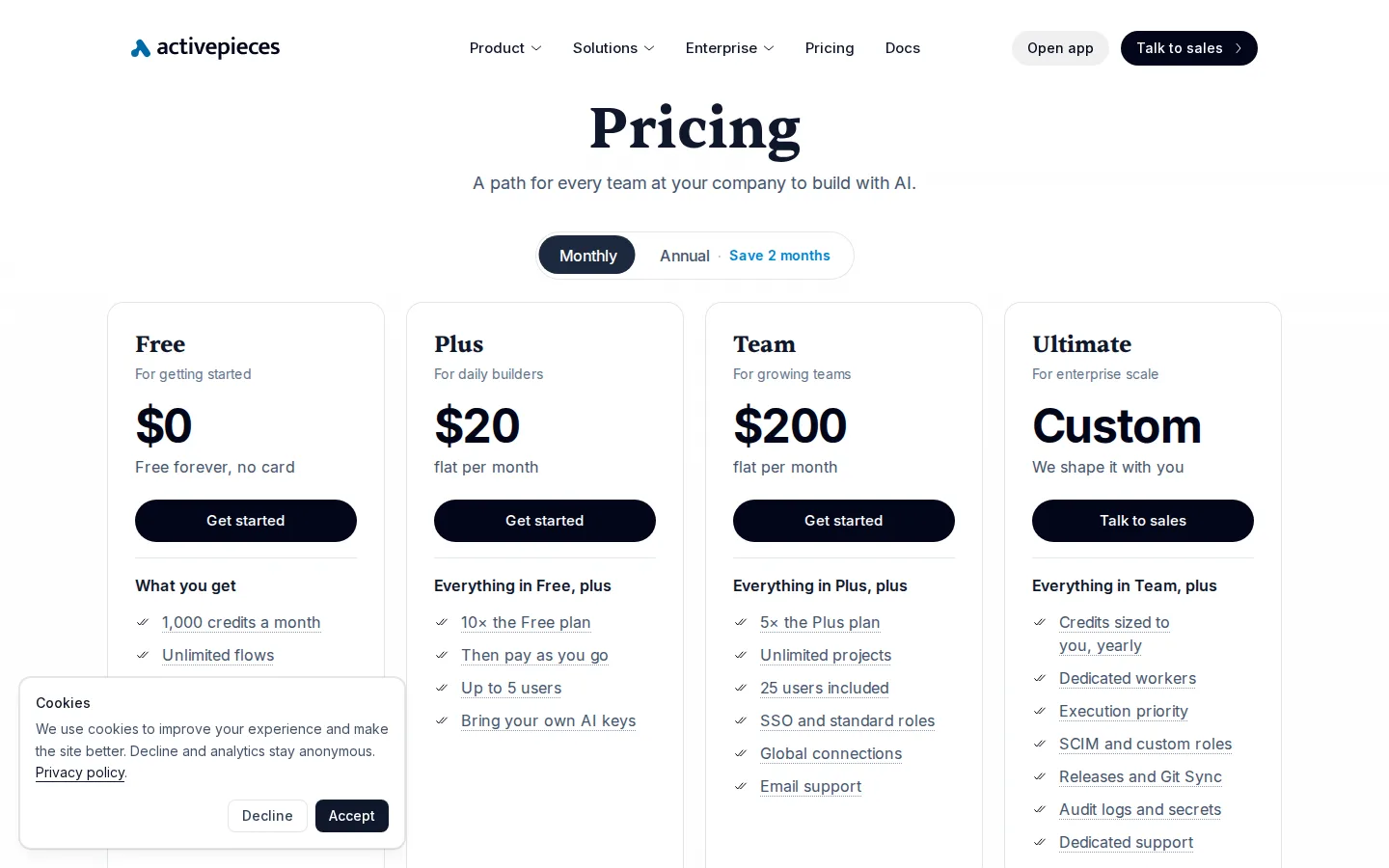
This Activepieces review breaks down how the platform cuts task fees by running directly on your own infrastructure. You keep control of business workflows without paying metered vendor rates.
Source: activepieces.com
Activepieces self hosting removes task-based fees by running entirely on your own servers. The Community Edition is distributed under the MIT license, remaining free while allowing unlimited task executions on user-owned systems. This framework helps teams manage sensitive business data without sending automation steps through third-party vendors.
Source: activepieces.com
Setting up the software is straightforward for engineers familiar with containers. A basic deployment runs through Docker on a $12 per month DigitalOcean droplet, providing a lean operational footprint. Teams should budget about 2 to 4 hours per month for monitoring system health, patching containers, and applying regular updates.
This setup lowers recurring expenses compared to proprietary platforms like Zapier. For businesses comparing helpdesk workflows such as gorgias vs zendesk for shopify, self-hosting keeps customer automation logic on private hardware. While ongoing administrative work requires time, internal teams gain complete control over their deployment costs and data privacy.
The short version
The short version
Activepieces delivers a compelling trade-off for technical operations teams needing private workflow infrastructure. This activepieces review finds that the open-source platform replaces metered task fees with complete control over your automation logic and data residency.
The self-hosted Community Edition is distributed under the MIT license and permits unlimited task executions on your own hardware at no software cost. In exchange, your engineers take on infrastructure maintenance, which generally requires budgeting about 2 to 4 hours per month for monitoring and updates. Teams documenting internal systems alongside their runs might pair this setup with workflows noted in our craft for teams review.
Activepieces Editorial Scorecard
Activepieces earns high marks for deployment flexibility and predictable pricing, though its connector library remains smaller than legacy competitors. The platform lets teams avoid per-task metering through an MIT-licensed core that runs on private servers or vendor cloud.
Self-hosting running on a 4 GB VPS costs roughly $24 per month without backups or $29 to $34 per month with backups. The free self-hosted Community Edition permits unlimited task executions on user infrastructure, providing outstanding value for high-frequency automation jobs.
Connector Ecosystem and Turnaround Times
The catalog offers between 250 and over 760 pre-built connectors, with about 60% built by the open-source community. If you need a missing piece, the platform does not publish fixed turnaround times. You must track updates via GitHub issues or build your own custom connector.
Developers who encounter an unsupported service can code custom pieces using TypeScript or JavaScript with npm package imports. Our software review hub tracks how open-source no-code automation platforms handle custom API steps when native pieces are missing. Inline code execution allows teams to bridge missing endpoints without waiting on upstream merges.
Credential Management and Access Control
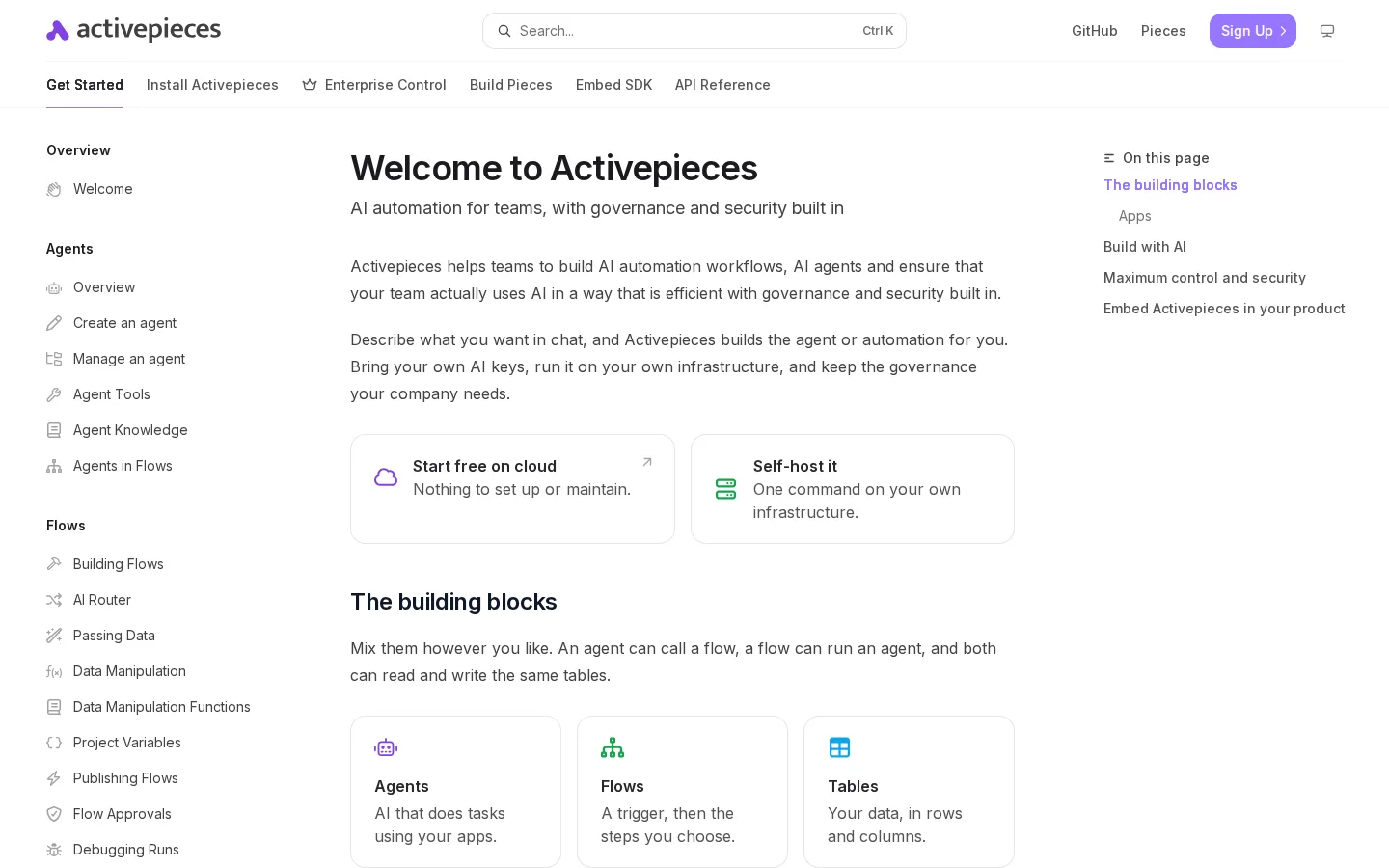
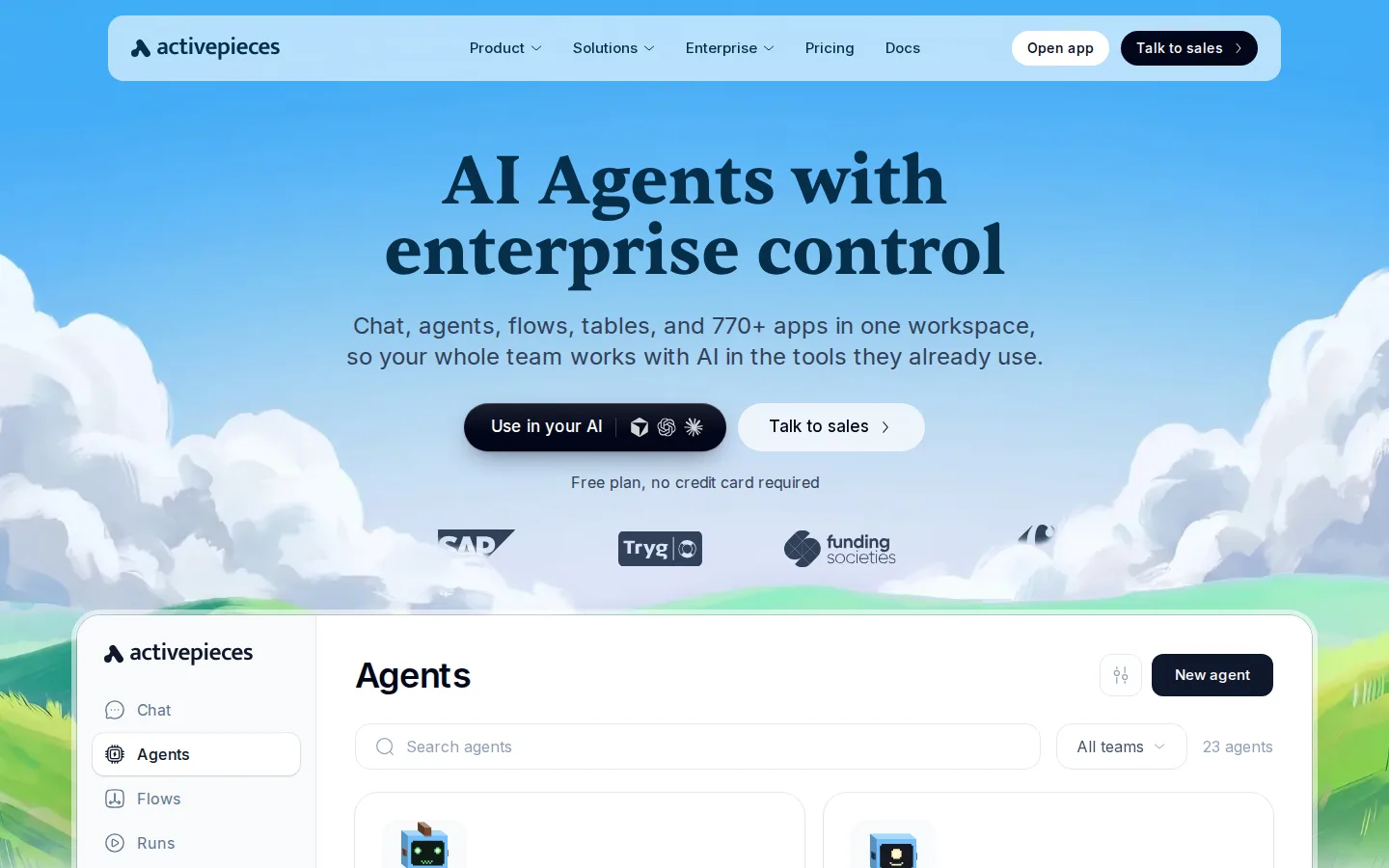
Non-technical users can safely run flows without directly handling raw API tokens or sensitive connection details. The platform supports role-based access control alongside single sign-on through Okta and Microsoft Entra, which lets administrators restrict editing rights and safeguard credentials across shared spaces. Furthermore, teams can stream audit logs directly into SIEM tools to track every configuration change.
Source: activepieces.com
Centralized oversight protects critical infrastructure while non-developers build routine automations. Activepieces is audited and compliant with SOC 2 Type 2 standards, ensuring that data handling meets strict independent security checks. When evaluating open source no code automation under our review methodology, these centralized guardrails ensure that non-technical staff can build freely without exposing enterprise keys.
Activepieces review: practical advantages and trade-offs
Activepieces delivers strong data ownership and cost control, though teams must weigh self-hosting maintenance against connector breadth. Deploying the platform unlocks flexible developer features alongside distinct operational trade-offs.
Pros
• Free self-hosted Community Edition distributed under the MIT license with unlimited task runs.
• Built-in support for JavaScript or TypeScript execution, retries, branching, loops, and human approvals.
• Model Context Protocol server interface enabling tools like Cursor and Claude to run workflows directly.
• The self-hosted Community Edition is distributed under the MIT license and permits unlimited task executions on your own hardware at no software cost.
Cons
• Activepieces delivers a compelling trade-off for technical operations teams needing private workflow infrastructure.
• Ongoing administrative overhead is modest but still requires regular technical attention.
• If you need a missing piece, the platform does not publish fixed turnaround times.
• Our software review hub tracks how open-source no-code automation platforms handle custom API steps when native pieces are missing.
Activepieces is best suited for privacy-conscious engineering teams and mid-size businesses running high-volume automations. Organizations that want to avoid recurring task taxes can deploy the open-source MIT engine directly on their own cloud infrastructure.
Teams with internal DevOps resources gain the strongest return from Activepieces. The platform distributes its core code under the MIT license, and the self-hosted Community Edition permits unlimited task runs on local hardware without recurring execution fees.
The verdict
Who should choose Activepieces
In this activepieces review, non-technical teams requiring thousands of niche third-party apps should stay with established hosted tools. Activepieces offers between 400 and over 760 native connectors, which covers standard SaaS stacks but misses legacy enterprise software. Enterprise teams needing native Okta SSO and SIEM audit streaming must negotiate custom enterprise terms.
Frequently asked questions
Is Activepieces truly open source?
Yes, Activepieces distributes its core code under the permissive MIT license. Anyone can download and run the self-hosted Community Edition for free with unlimited task executions on their own servers.
Can non-technical teams use Activepieces?
Yes, non-technical staff can build workflows visually using hundreds of pre-built connectors without writing code. When automations require complex data transformations, technical teammates can drop in custom TypeScript or JavaScript steps alongside visual branching and approvals.
Evaluating an activepieces review often comes down to governance and infrastructure control. Teams can deploy workflows across vendor cloud instances, private self-hosted setups, or air-gapped data centers. Enterprise options include single sign-on through Okta and Microsoft Entra, as well as audit log streaming to SIEM platforms.
For a closer look, read loom review.
Produced by
ToolNest Editorial
Independent software reviews, comparisons and guides for people who want their tools to feel lighter.
Keep reading
More from the nest.
 Reviews
Read our candid Notion review for small teams. Explore verified pricing, core trade-offs, and daily workflow fit to decide if it matches your needs.
 Reviews
Read our candid Fathom Analytics review. Learn if this privacy-first, cookieless tracker provides enough data to replace Google Analytics 4 for small sites.
 Reviews
Our Craft for Teams review explores native performance, daily notes, collaboration limits, and pricing to help small design teams decide.
The ToolNest letter
Better tools, once a week.
One calm email with the reviews, comparisons and tools worth your attention.
Join the newsletter“Less noise. Better tools. A calmer stack.”